Rhodes Boat Website: Theme, Booking Systems and SEO Architecture
Rhodes Boat is a purpose-built WordPress platform for marine tourism. Its architecture separates the branded presentation layer from the booking and commercial systems, bringing the theme, fleet content, availability, pricing, payments, email, maps and SEO together as one maintainable product.
WORDPRESS DEVELOPMENT · MARINE TOURISM · TECHNICAL SEO
Rhodes Boat is a purpose-built WordPress platform for marine tourism. Its architecture separates the branded presentation layer from the booking and commercial systems, bringing the theme, fleet content, availability, pricing, payments, email, maps and SEO together as one maintainable product.
Rhodes Boat is a purpose-built WordPress platform for marine tourism. Its architecture separates the branded presentation layer from the booking and commercial systems, bringing the theme, fleet content, availability, pricing, payments, email, maps and SEO together as one maintainable product.
This case study follows the supplied Rhodes Boat — Full Site Audit dated 24 October 2026. The audit describes Rhodes Boat Core plugin 2.4.23, database schema 1.2.0 and theme runtime 2.1.8. It is a documentation-based architecture review, not a live performance or penetration test.
🏝️ Homepage Design: A Premium First Impression
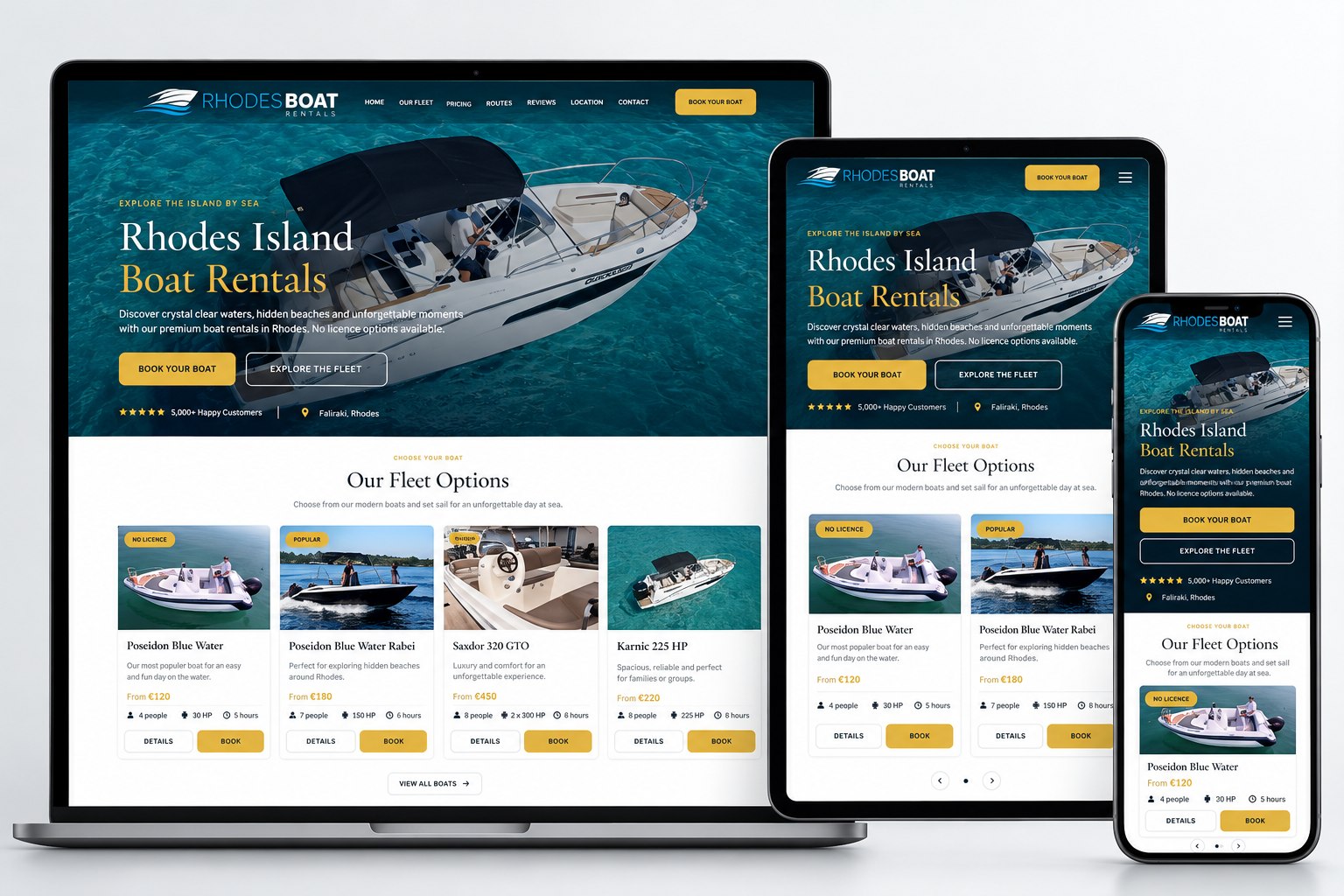
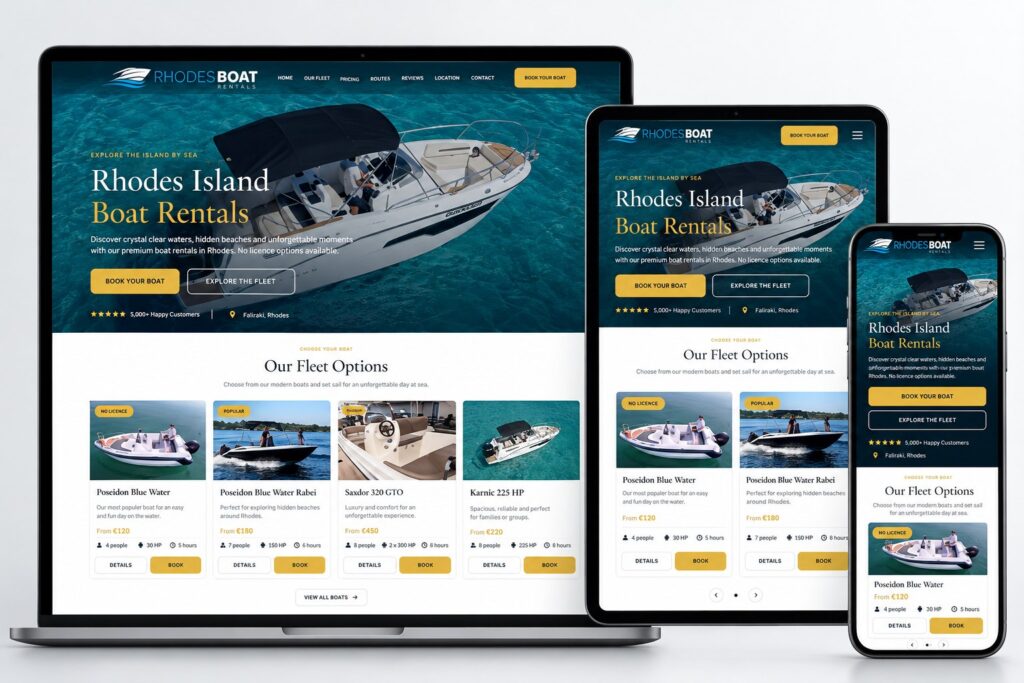
The homepage introduces Rhodes Boat through a distinctive marine visual identity, clear navigation and a prominent route into the fleet and booking journey. The responsive concept uses a cinematic coastal hero, navy-and-gold styling, and structured sections for fleet discovery, pricing, destinations, testimonials and calls to action. On mobile, the hierarchy should remain clear: visitors can understand the offer and reach the next step without navigating a crowded interface. This is a design mockup, not a captured screenshot of the live website.
🚤 Fleet Overview: Helping Guests Choose a Boat
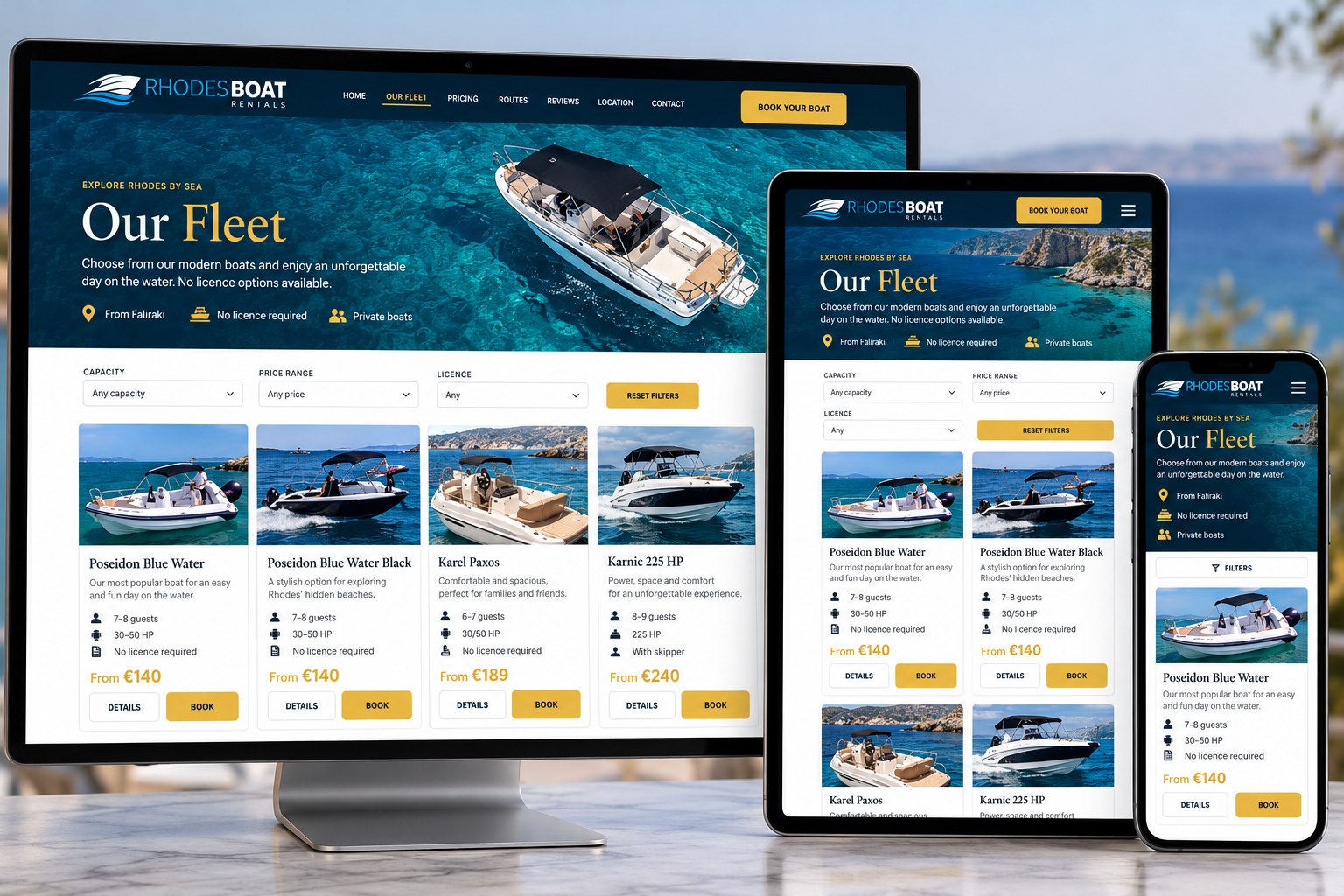
The fleet page turns boat inventory into a browsable product catalogue. Each boat needs a clear identity, strong photography, key specifications and a straightforward path to details or booking. The audit documents a dedicated `rb_boat` content type for specifications, capacity, galleries, booking status, duration packages and extras. This structured model helps keep the boat cards and detail pages consistent as the fleet changes. Actual boat specifications, prices and availability should always come from verified site data.
🌊 Boat Detail Page: From Discovery to Reservation
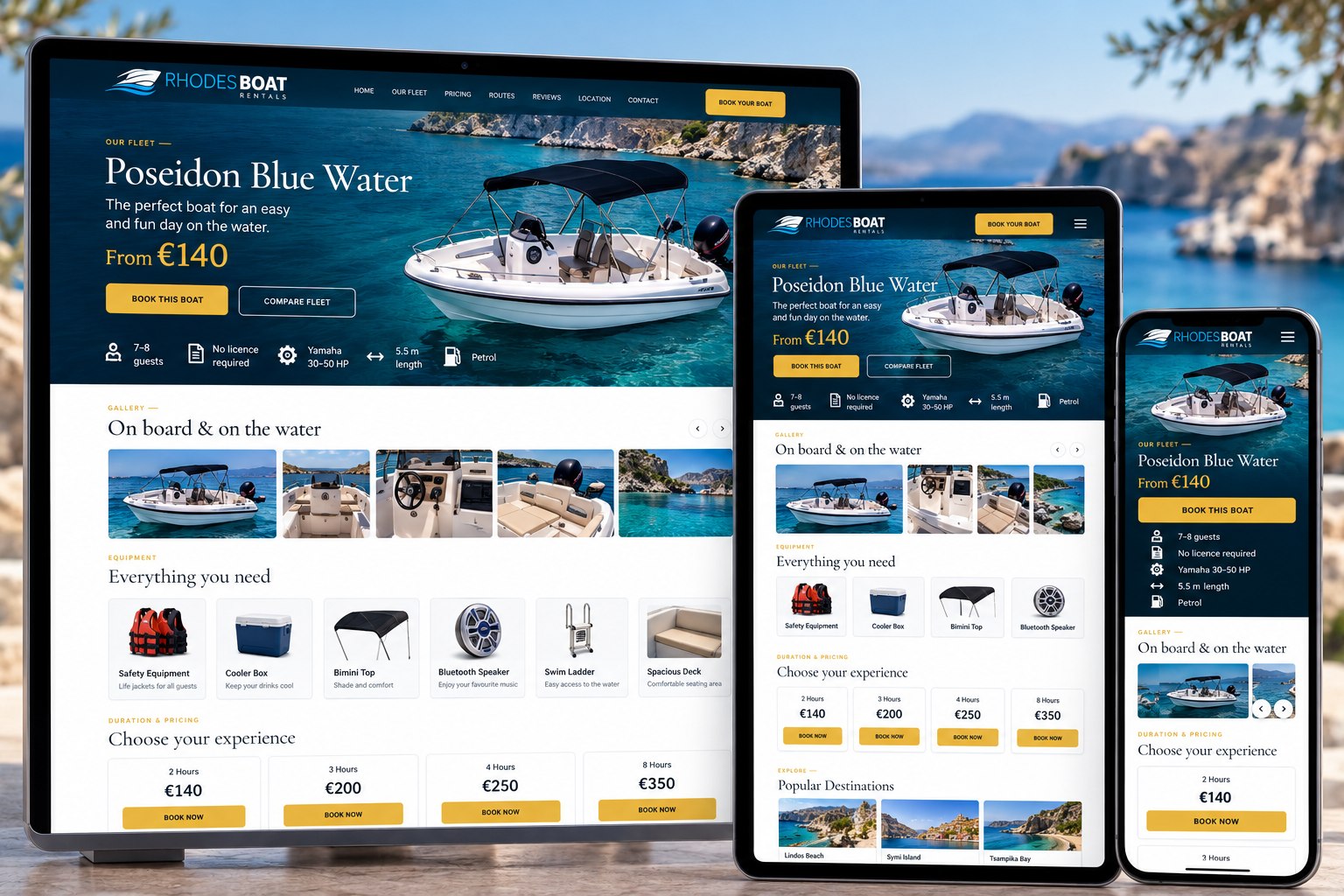
The Poseidon Blue Water concept demonstrates how a single-boat page can combine a strong hero, overview, gallery, equipment, pricing packages, FAQs, related options and a sticky booking action. The theme audit describes these as typical boat detail sections. The key system principle is that the theme presents the information while Rhodes Boat Core owns pricing, availability and booking logic. That separation prevents the design layer from becoming a second source of commercial rules.
🧭 Detailed Boat Experience: Specifications, Routes and Booking Context
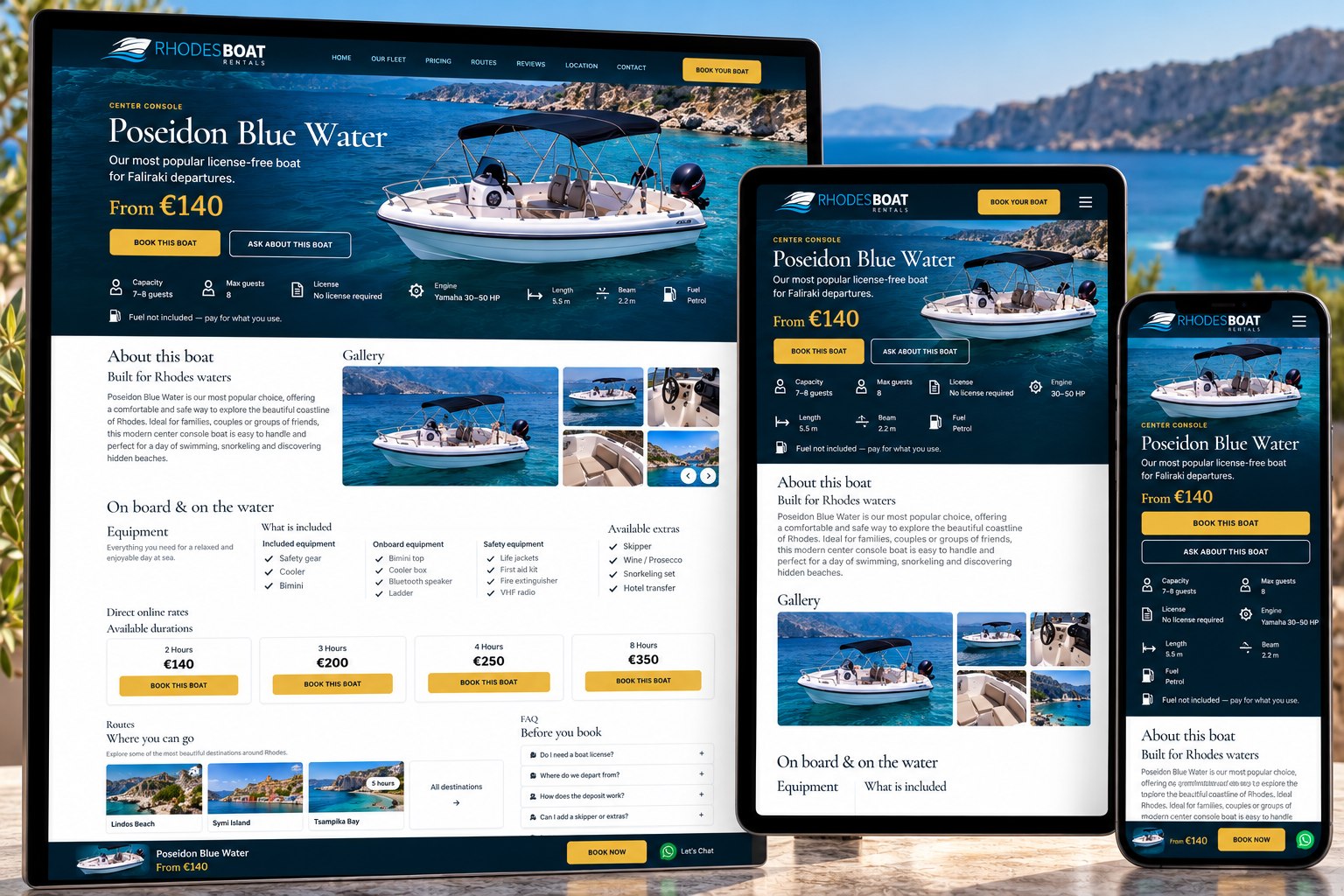
A detailed boat page can help guests evaluate a trip before they start the booking flow. Clear sections for boat information, duration options, extras, destination suggestions and booking calls to action reduce uncertainty. The actual availability engine checks buffers and blocked periods, while duration prices and bookable extras can be configured globally or per boat. The mockup illustrates the intended information architecture; live prices, route details and equipment must be checked against the production content.
🖥️ Reference View: Keeping the Design Grounded in the Site
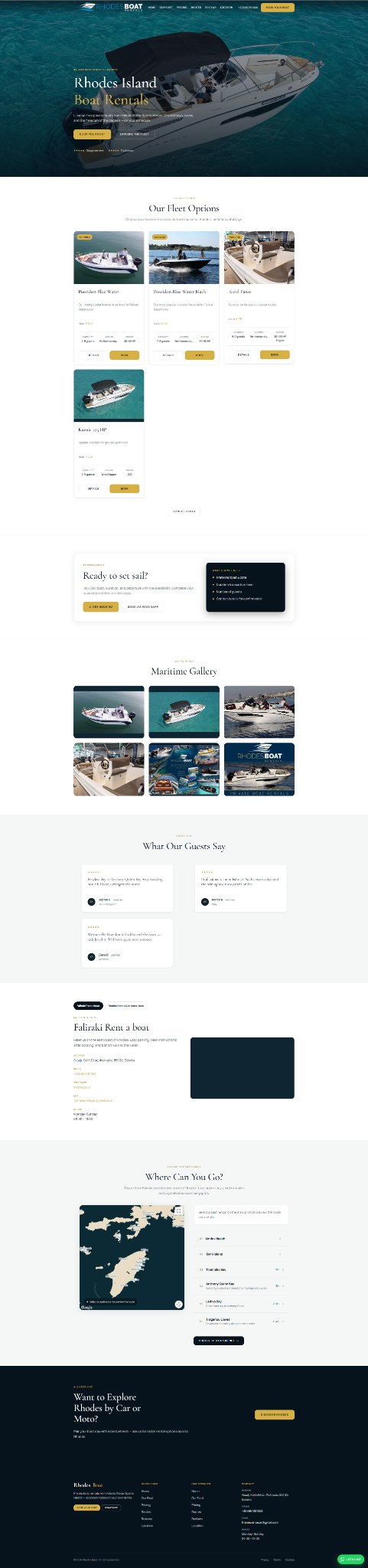
This reference image is included as a visual orientation point for the article. It helps connect the generated responsive concepts with the supplied project materials. The design discussion should distinguish mockups from live screenshots and should not treat a concept image as proof of runtime behaviour. Implementation claims in this case study are based on the supplied site audit, while visual observations are based on the included design assets.
🎨 Theme and Design System
The Rhodes Boat theme owns presentation: design tokens, typography, spacing, buttons, cards, forms, layouts, animation, header and footer. Its CSS is split into focused modules such as `tokens.css`, `typography.css`, `buttons.css`, `cards.css`, `forms.css`, `layout.css` and `chrome.css`. The visual direction is marine navy with gold accents. The theme also provides the homepage, boat and destination templates, booking-page shell, SEO landing template and 404 page.
🧩 Rhodes Boat Core: The Business Layer
Rhodes Boat Core owns business logic and data: custom post types, booking records, availability, duration pricing, extras, payments, transactional email, SEO, Elementor widgets and admin tools. The documented boundary is deliberate: bookings, payments and pricing must stay in the plugin rather than being duplicated in the theme.
🚤 Structured Fleet and Destination Content
The plugin registers `rb_boat` for fleet items and `rb_destination` for routes and bays, alongside testimonial and FAQ content types. Boat records can hold specifications, capacity, galleries, booking flags, duration packages and extras. Destination records support duration, distance, coordinates and stored sea-route waypoints.
📅 Multi-Step Booking and Real Availability
The public `/booking/` flow moves through boat selection, date and duration, available start time, extras and guests, customer details, and a summary. The availability engine accounts for buffer minutes and blocked periods, including maintenance, weather or private charters. Cancelled bookings do not hold inventory. The audit notes that “To” represents the last departure start, inclusive, not the latest return time.
💶 Flexible Pricing and Bookable Extras
Pricing can be managed globally or per boat. Global duration rates provide a fallback when a boat has no duration packages; global extras can likewise be used as a fallback. Operators can configure multiple duration/price and extra/name/price rows without changing code. This flexibility should be accompanied by a clear operator workflow so fallback behaviour is understood.
💳 Revolut Payment Paths
The audit documents two payment routes: Revolut Hosted Checkout through the Merchant API, and Revolut.me payment links with a deposit amount and booking-reference note. Hosted Checkout includes order creation, redirect, webhook HMAC verification and return synchronisation. Production readiness still requires verifying secrets, webhook configuration, deposit settings and end-to-end payment behaviour.
✉️ Transactional Emails and Reminders
Lifecycle email templates cover received, payment pending/success/failed, confirmed, changed, cancelled, reminders and thank-you messages. Administrators can resend emails from a booking record, and WP Cron drives reminders. Delivery still depends on the host mail setup or SMTP configuration, so real delivery tests are essential.
🔎 Built-In SEO and Structured Data
The plugin provides SEO titles and descriptions, Open Graph and Twitter metadata, canonicals, sitemap and robots handling, JSON-LD for organisation/local business, website, boats as products, destinations, FAQs and breadcrumbs. It also documents SEO landing pages for Rhodes and Faliraki boat rentals. This native system is intended to avoid duplicate output from competing SEO plugins; it supports SEO work but does not guarantee rankings.
🗺️ Google Maps Destination Explorer and Sea Routes
The homepage Destination Explorer uses Google Maps when a valid API key is configured. Sea routes are stored as editable waypoints rather than live Directions API polylines. The admin Sea Route Editor Pro lets operators place destination pins and draw routes. Maps require a valid API key and billing, and should be checked on the deployed site.
🛡️ Admin Tools, Security and Operations
The admin surface includes settings for general configuration, pricing, payments, email, SEO and homepage media, plus booking management, availability and a day/week/month calendar. The audit notes capability checks, nonces, sanitisation/escaping, secrets in configuration constants and a booking honeypot. It also states that no full penetration test or dependency audit was performed.
🧱 Elementor Free: Optional, Not a Dependency
The theme can render the homepage through PHP sections or an Elementor-built page. The custom Rhodes Boat widget category wraps shared homepage section templates for Hero, Fleet, Pricing, CTA, Gallery, Testimonials, Location, Destinations, Destination Map and Cross-sell. Elementor Pro is not required; the header, footer, booking page and custom post type templates remain owned by the theme/plugin system.
🔁 The End-to-End Guest Journey
A visitor discovers the brand on the homepage, explores the fleet or destinations, chooses a boat, selects a date and duration, picks an available start time, adds extras and guest details, then confirms the booking and follows the configured deposit path. Email notifications and the admin booking/calendar views support the operator after submission. This journey connects the front-end design to the business systems behind it.
✅ Production Readiness: What Still Needs Verification
- Align the theme stylesheet version 2.1.7 with the runtime constant 2.1.8.
- Complete the Elementor homepage hero H1 manually where required.
- Confirm pricing and extras fallback behaviour for every boat.
- Test booking flow, hotel field, extras, and availability end to end.
- Verify Revolut webhooks, secrets and deposit amounts in the production environment.
- Confirm email delivery and reminders through the configured mail transport.
- Check Google Maps API configuration and billing.
- Validate one title, one description and one JSON-LD graph on priority pages.
- Submit the sitemap and review indexation in Search Console.
Conclusion: Design, Systems and Operational Excellence
Rhodes Boat is documented as a cohesive marine-tourism platform rather than a generic theme with unrelated booking plugins. Its core strength is the separation between the theme’s visual experience and the plugin’s commercial logic. Responsive boat and destination pages, configurable pricing, real availability, Revolut payment paths, lifecycle email, built-in SEO and map-based exploration work together to support the guest journey.
The next step is disciplined operation: keep content and settings accurate, test payments and email on production, validate SEO output, and align version documentation. This case study describes the architecture documented in the supplied audit; it does not claim measured rankings, conversion lifts or a completed security audit.